THE JFT EDIT

The site provides Real Estate news, guidance, and information for both real estate agents and home owners. Covering topics such as construction, mortgage advice and much more. Let us guide you in your real estate decisions.

  • 73452521.295.jpg

    A Deputy Chairman of the African Union Commission (AUC), Mr Kwesi Quartey, has said Ghana needs to reconsider and review its retirement age upwards from the stipulated 60 years.

    Mr Quartey said that would help the nation benefit from the knowledge and experience of people who fell within that age bracket who were still very productive.

    “As people age, they acquire knowledge and experience in their areas of expertise and they become valuable resources where they can deliver to the best of their ability. Most people, at the age of 60, are still productive and active and they tend to be at the height of their prowess,” he stated.

    He, therefore, suggested that the retirement age should be made flexible, so that if a person was healthy and willing, he or she would be given the chance to continue working for some few more years after attaining 60 years.Mr Quartey made the suggestion when he delivered the keynote address at the annual research conference on ageing organised by the Centre for Ageing Studies of the University of Ghana.

    The two-day conference, which is the third edition, is being held at the Great Hall of the University of Ghana on the theme: “Ageing in the African context: Emerging issues and empowering options”. The conference, which forms part of the International Day of Older Persons, seeks to share and understand issues surrounding ageing and how best to prosecute the agenda for quality life for the elderly.  The 2010 Population and Housing Census showed that although the proportion of older persons (60+ years) decreased from 7.2 per cent in 2000 to 6.7 per cent in 2010, in terms of absolute numbers there had been a seven-fold increase in the population of the aged from 215,258 in 1960 to 1,643,978 in 2010.

    The proportion of the female elderly population was 56 per cent, compared with 44 per cent for males. Mr Quartey said Africa lacked trained skilled labour and, therefore, people who had acquired skills and knowledge over a long period of time should be given the chance to transfer their knowledge, skills and expertise to the younger generation.  He said the aged became valuable resources and a reliable storehouse of knowledge and skills who could immensely contribute their quota to the development of the country even when they were 60 years.

    He further noted that the ageing population was growing and, therefore, there was the need to pay critical attention to the needs of the aged to ensure their well-being and quality of life.  Although the government of Ghana approved a National Ageing Policy in 2010, Mr Quartey said, much had not been done to promote the welfare and well-being of the aged in the country.

    Retirement age gradually increasing
    The minimum retirement age in some developed countries had gradually increased from 60 to 62 years by 2018 and it is expected to be gradually reviewed upwards from 65 to 67 years by 2023. In the United States, the retirement age is between 62 and 65 years and it is.
    .//SC//GHANAWEB//

  • a45d96c89ed84e8cbfaca9dbb6ea5dbd_18.jpg

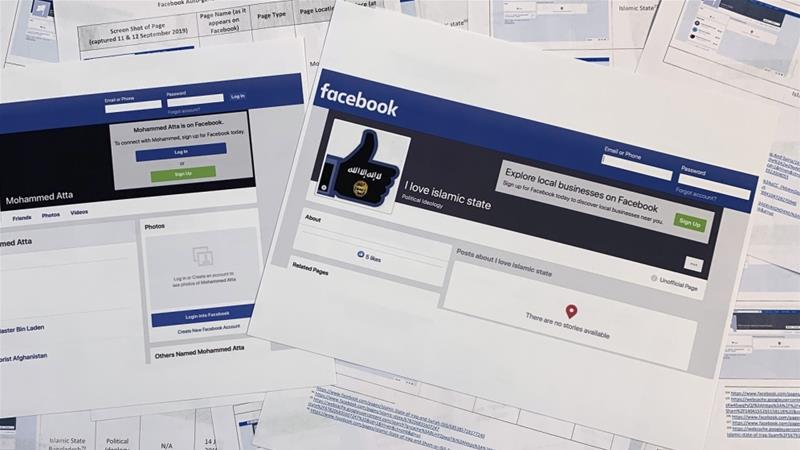
    Facebook has removed several pages, groups and accounts on its platforms from the Middle East, Africa and Southeast Asia, citing “coordinated inauthentic behaviour” aimed at misleading social media users.

    A total of 443 Facebook accounts, 200 pages and 76 groups, as well as 125 Instagram accounts, were removed, the social media platform said on Thursday.

    They were traced to three separate and “unconnected” operations, one of which was operating in three countries, the United Arab Emirates, Egypt and Nigeria; and two others in Indonesia and Egypt, to spread misleading posts and news articles.

    Facebook, which owns one-time rivals Instagram and WhatsApp, said the accounts were engaged in spreading content on topics like UAE’s activity in Yemen, the Iran nuclear deal and criticism of Qatar, Turkey and Iran.

    Those operations created “networks of accounts to mislead others about who they were, and what they were doing,”  Nathaniel Gleicher, head of cybersecurity policy said in the statement.

    In all, the accounts on Facebook and Instagram commanded an estimated 7.5 million followers. The company added that it is taking down the accounts “based on their behaviour, not the content they posted”.


    “In each of these cases, the people behind this activity coordinated with one another and used fake accounts to misrepresent themselves.” Facebook defines coordinated inauthentic behaviour as “when groups of pages or people work together to mislead others about who they are or what they are doing.”

    One account called USA Thoughts posted false information about Qatar developing a “Hate App”. In Indonesia, accounts involved in “domestic-focused” issues were accused of spreading news about the deadly protests in the West Papua region.

    “Although the people behind this activity attempted to conceal their identities, our investigation found links to an Indonesia media firm InsightID.”

    As much as $300,000 was reportedly spent on Facebook ads paid in the Indonesian currency, rupiah.

    Al Jazeera was not immediately able to contact InsightID.

    During the April 2019 national elections, President Joko Widodo, who was seeking re-election, was also targeted with disinformation on social media, with some accusing him of being a communist and an underground Christian.

    //SC//ALJAZEERA//

  • dcd6f9af4df3408d9179aebc44c437c5_18.jpg

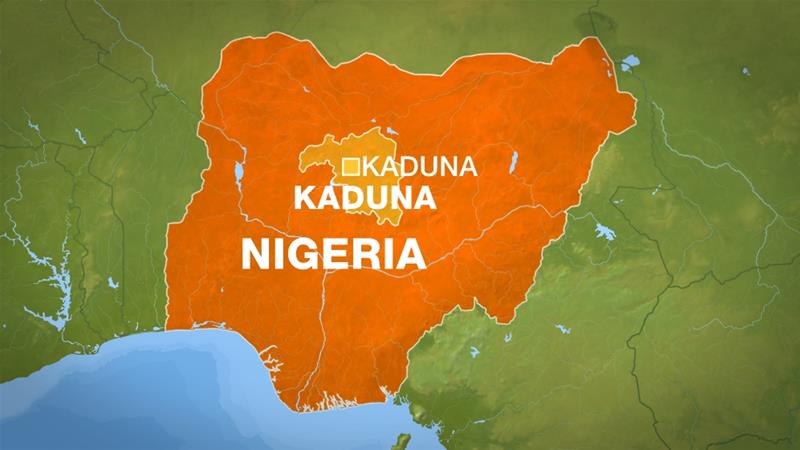
    Gunmen have abducted six girls and two staff members from a boarding school in northern Nigeria, according to a police spokesman.

    Yakubu Sabo said armed men gained entry on Thursday into the Engravers College, a mixed boarding school in a remote area south of the city of Kaduna.

    They “took away two staff of the college and six female students to an unknown destination”, Sabo said.

    It was not immediately clear who had taken them.

    “The Kaduna state police command has mobilised and dispatched some operatives with a view to trail the perpetrators of this crime and rescue the victims and apprehend the criminals. The operation is still ongoing,” he told Al Jazeera by phone.

    An official at the school confirmed the kidnapping to the AFP news agency.

    “Unknown gunmen broke into the school around 12:10 am (23:10 GMT) and took away six female students and two staff who live inside the school,” Elvis Allah-Yaro said.

    Abductions for ransom are common in Nigeria and the highway from the capital Abuja to the city of Kaduna has seen a surge in attacks by armed criminals, but raids on schools are rare.

    In 2014, the armed group Boko Haram abducted 276 schoolgirls from the remote northeastern town of Chibok in the Borno state.

    About 100 of those schoolgirls remain missing. Last week, police in the city of Kaduna freed hundreds of men and boys from a purported religious school where they had been beaten and abused.

    //SC//ALJAZEERA//


  • 4aa2d8ee1b4749e0b8bdf8783378cdbb_18.jpg

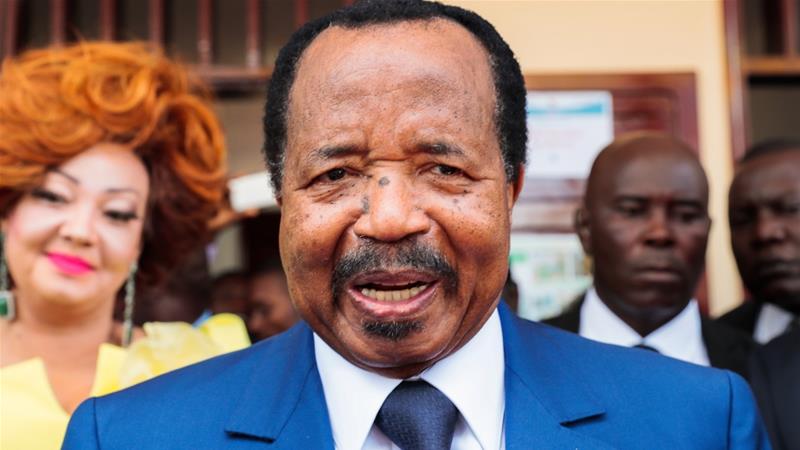
    Cameroon’s President Paul Biya has said he will drop charges against 333 prisoners arrested for their alleged roles in a two-year separatist uprising, but rebel leaders dismissed the move as a political stunt and pledged to keep fighting.

    Thursday’s announcement made on Twitter comes during talks launched by Biya to end fighting between rebels and the military that has killed more than 1,800 people, displaced over 500,000 and put a major dent in the economy.

    The so-called “national dialogue” faltered before it began on Monday when separatist leaders said they would not participate because their demands had not been met. It went ahead anyway, with politicians, civil society groups and religious groups attending the event which is due to end on Friday.

    But Thursday’s move represented one of Biya’s largest concessions yet amid what has become a major threat to his nearly 40-year rule.

    “I have ordered the discontinuance of proceedings pending before Military Tribunals against 333 persons arrested for misdemeanours, in connection with the crisis in the North-West and South-West Regions,” Biya said on Twitter.

    Anglophone separatists, who are trying to form a breakaway state called Ambazonia in the majority French-speaking country’s two minority English-speaking regions, on Thursday said that the amnesty did not go far enough.

    The separatists have called for the release of what they say are 5,000 people imprisoned since 2016, including 10 leaders who were sentenced in August to life in prison on terrorism charges, and the withdrawal of Cameroon’s military from the North-West and South-West Regions.

    “We will not accept an olive branch from someone whose troops are still in our territory,” said Ivo Tapang, a spokesman for 13 armed groups called the Contender Forces of Ambazonia. “We will intensify our struggle with guns and bullets.”

    //SC//ALJAZEERA //

  • ef3516e68a9c4acebad5b5d8033053d1_18.jpg

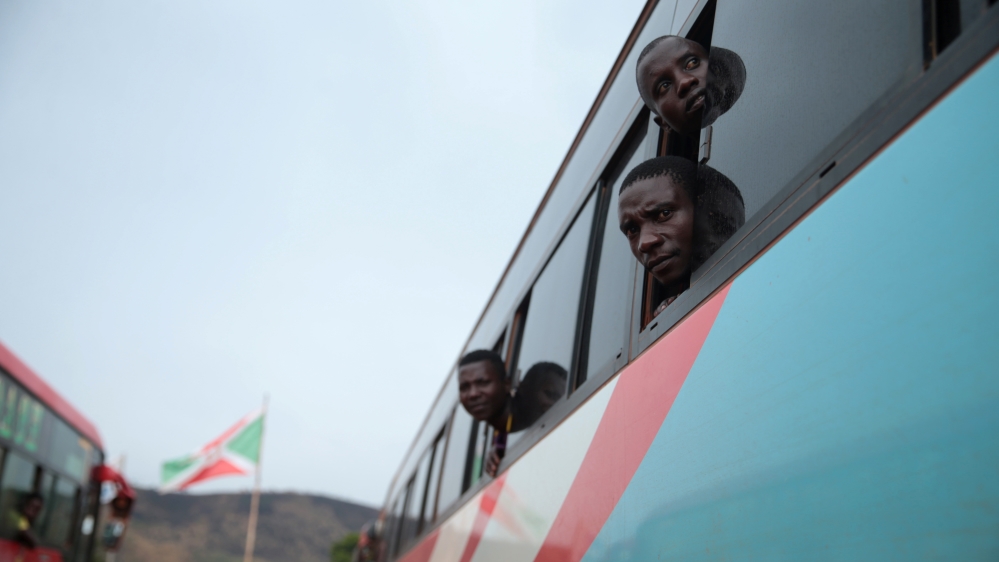
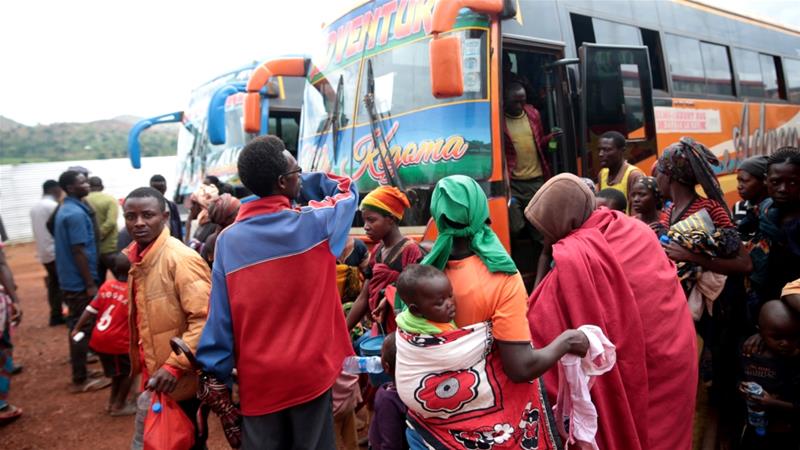
    Nearly 600 Burundian refugees have left Tanzania to return to their home country, the United Nations said – the first batch in the mass repatriation of hundreds of thousands of people who fled political violence in Burundi four years ago.

    A Tanzanian government official and the UN said all of Thursday’s returns had been voluntary.

    More than 400,000 Burundians left the country following a surge of political violence in 2015 when President Pierre Nkurunziza ran for a third disputed term in office and opponents accused him of breaching the constitution.

    Hundreds of people were killed in the ensuing unrest.

    Nkurunziza won the election again and, the following year, Burundi suspended all cooperation with the UN human rights office in the country when a UN-commissioned report accused the government and its supporters of being responsible for crimes against humanity.

    1f09dc69a122499094f1f36a26093f9f_18.jpg

    Currently, some 182,000 Burundians are living in three camps in Tanzania, according to the UN.

    “All refugees who had registered to return home voluntarily from all camps gathered at Nduta camp and departed from there,” said Athuman Igwe, an official who is responsible for coordinating refugee affairs in Kigoma, western Tanzania.

    The UN refugee agency, UNHCR, said it had organised 590 Burundian refugees’ journey home in coordination with the UN’s International Organization of Migration.

    It said it had not promoted the repatriation programme but was ready to help anyone who wanted to go back.

    “We urge the governments of Tanzania and Burundi to respect their commitments to uphold international obligations and ensure that any refugee returns remain voluntary and that no refugee or asylum seeker is returned to Burundi against their will,” it added in a statement.

    A UN commission on Burundi reported last month that there was a risk of a fresh wave of atrocities as the 2020 election approaches in the landlocked state with its political crisis unresolved.

    But Burundi and Tanzania agreed in August to start repatriating the refugees, saying that conditions in Burundi had improved.

    Some refugees have expressed fears that they might be forcibly returned to Burundi, but government spokesman Hassan Abbas said on Thursday that “nobody will be forced to go back”.

    Nevertheless, he insisted “Burundi is peaceful and they are busy preparing for elections next year”.

    “Tanzania respects the international agreements on refugees and will ensure the refugees’ relocation process is handled carefully,” he told reporters.

    Thursday’s returnees arrived on eight buses in Gisuru in eastern Burundi, where there is a transit centre for returning refugees, witnesses told the AFP news agency.

    “These returnees will stay in the camp until tomorrow [Friday], before being sent to their home towns with a kit of supplies to last them three months,” a Burundian official told AFP, on condition of anonymity.

    The UNHCR says it has facilitated the voluntary return of almost 75,000 refugees since September 2017, under a deal with Burundi and Tanzania.

    According to the agency, there are 71,000 Burundian refugees in Rwanda, 45,000 in the Democratic Republic of the Congo and 43,000 in Uganda.

    //SC//ALJAZEERA//

  • Slow down the aging process and live your optimal life with these tipsRead More → The post Some tips to slow down the aging process appeared first on The Art of Being Fabulous.

    via Some tips to slow down the aging process — The Art of Being Fabulous

  • Slow down the aging process and live your optimal life with these tipsRead More → The post Some tips to slow down the aging process appeared first on The Art of Being Fabulous.

    via Some tips to slow down the aging process — The Art of Being Fabulous

  • Slow down the aging process and live your optimal life with these tipsRead More → The post Some tips to slow down the aging process appeared first on The Art of Being Fabulous.

    via Some tips to slow down the aging process — The Art of Being Fabulous

  • _109060419_9721e45b-c595-4a5c-b986-3916c4875d6b.jpg

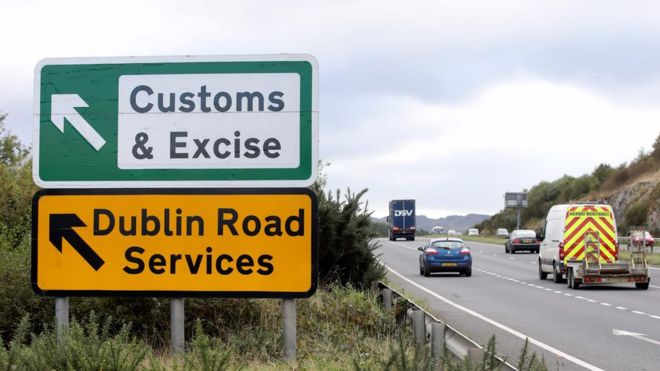
    The government has published its Brexit proposals to the EU, including plans to replace the Irish backstop.

    The plan would see Northern Ireland essentially stay in the European single market for goods through the creation of an “all-island regulatory zone”. The Northern Ireland Assembly would have to approve the arrangements first and be able to vote every four years on whether to keep them. The European Commission says it will “examine [the proposals] objectively”.

    Speaking at the Conservative Party conference, Mr Johnson said the only alternative to his plan was no-deal.

    He has written to the European Commission’s president, Jean-Claude Juncker, alongside the proposals, saying they “respect the decision taken by the people of the UK to leave the EU, while dealing pragmatically with that decision’s consequences in Northern Ireland and in Ireland”.

    Speaking before he saw the plan, Irish Prime Minister Leo Varadkar told the Irish Parliament: “What we are hearing is not encouraging and would not be the basis for agreement.”

    The UK is set to leave the EU on 31 October and the government has insisted it will not negotiate a further delay beyond the Halloween deadline.

    However, under the terms of a law passed by Parliament last month, the PM faces having to request another extension unless MPs back the terms of withdrawal by 19 October – two days after a summit of European leaders.

    //SC//BBC//

  • _109054767_reuterstobymelville.jpg

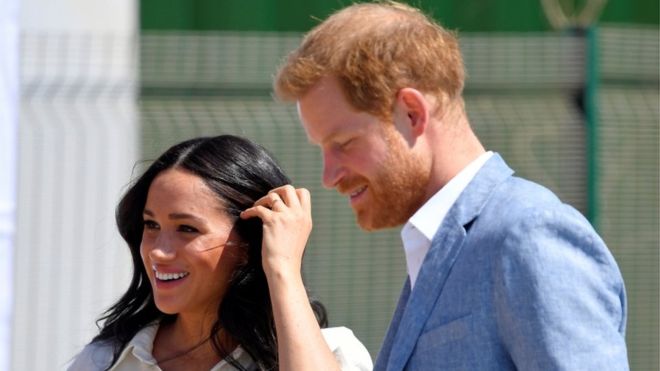
    The Duke and Duchess of Sussex have begun the final day of their overseas tour as the Mail on Sunday says it will “vigorously” defend itself in a court case launched by the couple.

    Prince Harry’s wife is suing the paper over a claim it unlawfully published a private letter Meghan sent to her father, Thomas Markle.

    The duke said the legal action was in response to “relentless propaganda”.

    _109060589_chrisjacksonpawire.jpg

    A Mail on Sunday spokesman said the paper stood by the story it published.

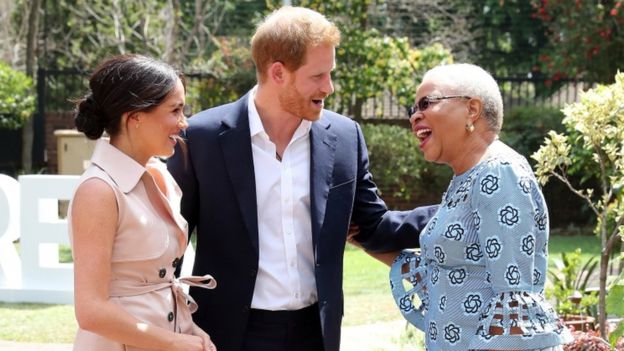
    Prince Harry said “positive” coverage of the couple’s tour of Africa had exposed the “double standards” of “this specific press pack that has vilified [Meghan] almost daily for the past nine months”.   The royal couple visited Tembisa township, near Johannesburg, to learn about a scheme to tackle youth unemployment, on the final day of their 10-day tour. They also met Nelson Mendela’s widow, Graca Machel.

    Meanwhile law firm Schillings, acting for the duchess, filed a High Court claim against the paper and its parent company – Associated Newspapers – over the alleged misuse of private information, infringement of copyright and breach of the Data Protection Act 2018.

    p066nxdf

    The duchess’s action comes after the Mail on Sunday published a handwritten letter she sent her father shortly after she and Prince Harry got married in 2018.

    The paper is accused of an “intrusive and unlawful publication of a private letter” and of a campaign of publishing false and derogatory stories about the Duchess of Sussex.

    Referring to his late mother Diana, Princess of Wales, Prince Harry said his “deepest fear is history repeating itself”.

    In a lengthy personal statement on the couple’s official website, he said the “painful” impact of intrusive media coverage had driven him and his wife to take action.

    ///SC//BBC//